Three-Dimensional Design Student Projects
Subtractive Sculpture
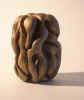
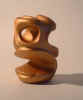
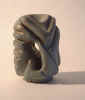
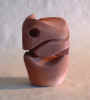
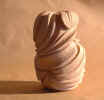
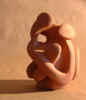
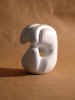
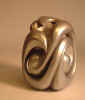
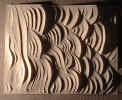
The goal of this exercise is to create a form
that will pull the viewer around the piece. Some of these objects started
as an oil-clay maquette and were thus enlarged. Other students benefited
more by being required to not think, essentially creating a
three-dimensional "doodle". The material is rigid urethane
foam and is carved using Surform files and rifflers. The larger carvings
required some power tools. A faux finish is required but something as simple as
a white eggshell appearance is acceptable.
Objectives:
-
To
experience the physicality of subtractive sculpture (carving).
-
To
create an object that pulls the viewer around the piece.
-
To
investigate the effect of negative space on a three-dimensional form.
-
To
experiment with organic, abstract, or nonobjective imagery.
-
To
design an artwork that is balanced physically as well as visually using symmetry, asymmetry,
or radial balance.
-
To learn the effect surface treatment can have on a
finished piece.
Thanks to a generous donor, General
Plastics, the students were able to work
larger than usual on these pieces.
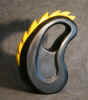
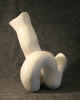
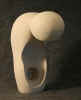
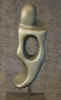
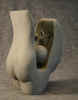
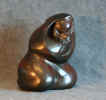
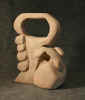
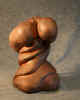
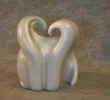
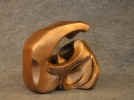
These pieces are roughly 16" in height
Additive Sculpture
The Grandiose Mundane
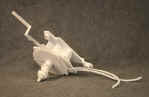
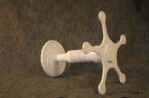
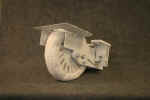
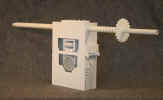
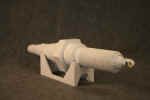
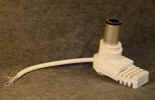
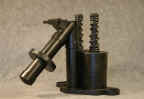
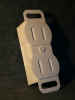
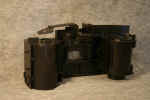
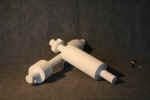
The essence of this Project is taking an ordinary, everyday
object and reproducing it in part or in whole on a grand scale. Homework
for this assignment includes looking for appropriate raw materials at hardware
and home stores, anything that can be manipulated to recreate the form. A
monochromatic "paint job" is suggested so that the focus is on the
form rather than color. Since I do not require power tool use in this
course, students may choose an object and design the reproduction in such a way
as to preclude their necessity. Some of these reproductions are easily
recognizable and have a rather Pop Art appeal while others are more abstract.

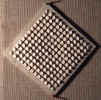
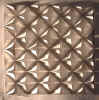
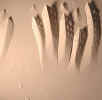
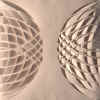
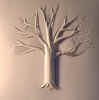
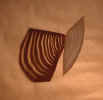
Bass Relief in Paper
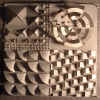
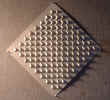
Students
use ordinary poster board and razor-knives to create a pictorial space through
the use of light and shadow. Each student chooses their own lighting
requirements and are allowed only the single piece of poster board. The
relief is created by cutting and folding shapes out of the surface No
other material is added and the poster board remains a solid unit, nothing is
detached.
Objectives:
-
To
experiment with and understand the effects of light and shadow on 3-D forms.
-
To
effectively organize relief elements and their cast shadows into a
composition.
-
To experience the creative potential of relief
sculpture.
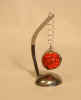
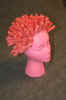
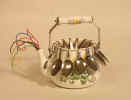
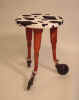
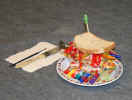
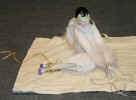
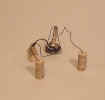
Found Object Sculpture
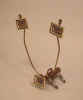
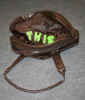
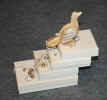
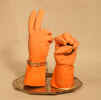
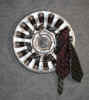
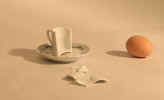
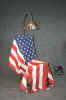
With this project we explore the “psychological
realm of the human perception of the exterior world”. Using chance and “the dislocation of ordinary things”, we
create objects that change or distort the meaning of the original objects.
Here we have a unique opportunity to communicate, through art, highly
personal or more global feelings about the world in which we live.
Examples shown in class include Man Ray's The Gift and Indestructible
Object, Duchamp's Fountain, and works by Joseph Cornell.
Objectives:
-
To create a previously nonexistent object using found
/ recycled materials
-
To organize design elements into a visually pleasing
(or disturbing) composition.
-
To explore the potential of “ready made” or mass
produced materials
-
To create an artwork from objects which were
originally created for a purpose other than art
-
To solve problems of mechanical joining
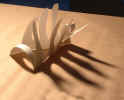
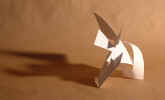
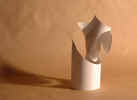
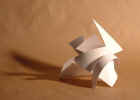
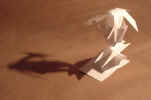
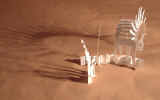
Cast Shadow Sculpture
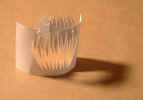
The shadow cast by a piece of sculpture can, at
times, play a significant role in the presentation of the piece.
It is also possible that the cast shadow becomes more visually
interesting than the sculpture casting it (although this is not required for
this project). The students are to consider shifting light sources such
as the role played by the sun in an outdoor sculpture.
Objectives:
-
To
design and execute a 3-D form within specified limitations.
-
To
design a form with attention to physical, as well as visual, balance.
-
To create an art object completely from within,
with no semblance to an actual object, in other words, non-objective.
-
To
create a sculptural form which casts a shadow that enhances the
"presence" of the piece.
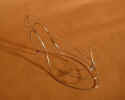
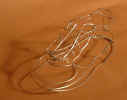
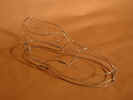
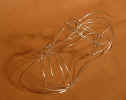
Drawing in 3 Dimensions
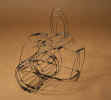
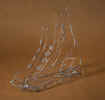
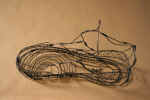
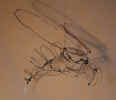
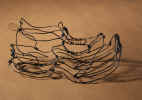
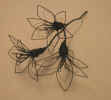
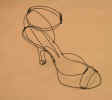
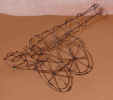
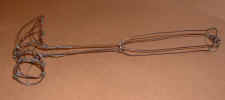
This is [usually] the first project of the
semester. Most every person has had some experience drawing,
and many art students have had extensive training making 2-Dimensional
images. With this exercise, we try to bridge the gap from 2-D to 3-D
by creating wire sculptures. Just as the pencil makes a line on the
paper, we use steel wire to make lines in space. It's a great
introductory project.
Objectives:
- To
move from two dimensions into the third dimension.
- To
increase spatial awareness and get the feel for working in the
round.
- To
explore the transformation of an everyday object into a piece of art
- To learn basic construction skills
Form VS. Function
In many creative endeavors , such as automotive design or kite making, function is paramount. An
"automobile" must fulfill certain criteria; it must have wheels, a
seat, safety devices, etc. in order to qualify as a car. For this project,
the students receive lectures on aerodynamics as applied to kites, proper
materials, and joinery. The only sure way to receive an "A" on this project
is to design and build a kite that is both original and air-worthy (it must
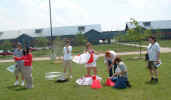
fly). Click on the thumbnail for a random sampling of "kite-day"
outings.
Objectives:
-
To
discover, explore, and experiment with elements of design related to the
physics of a particular function; the building and flying of a kite.
-
To
design and build a working kite that is unique and creative.
-
To
research and implement the use of materials appropriate for the form as well
as the function.
-
To learn that art is not created in an intellectual
vacuum. Immersing yourself in a
wide variety of interests and activities can often inspire artistic ideas.
|